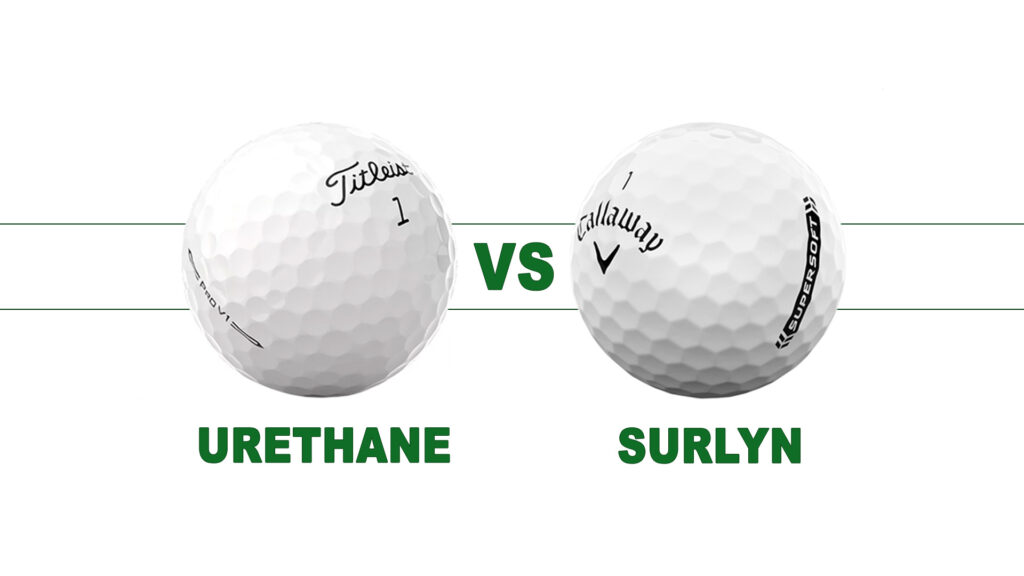
Urethane balls spin and stop better; Surlyn balls fly farther and last longer.
Choosing between Urethane vs Surlyn Golf Balls shapes how you score. I’ve tested hundreds of balls for players from beginners to scratch. In this guide, I break down how cover material changes spin, feel, distance, and control. You’ll see clear data, real course stories, and simple steps to pick the right ball for your game. Read on to learn which cover makes you better today.
Urethane vs Surlyn Golf Balls: The Basics
Urethane and Surlyn are the cover materials. That thin outer skin controls feel, spin, and durability. The core and mantle matter too, but the cover sets the tone.
In simple terms:
- Urethane cover: higher spin on wedges and short irons, softer feel, more control.
- Surlyn cover: lower spin, straighter flight, more distance, tougher cover.
Across many brand tests and independent robot data, urethane wedges often spin 500 to 1500 rpm more than Surlyn. Driver spin can be 200 to 400 rpm lower with Surlyn, which can add yards for many players.
How Construction Changes Performance
Golf balls vary by layers, compression, and dimple design. Each part shifts what you feel and see.
- Cover
- Urethane: soft, grippy, boosts friction at impact for more greenside spin.
- Surlyn (ionomer): firmer, slicker, reduces friction and spin.
- Mantle layers
- Extra layers can tune launch and spin by club type.
- Core
- Compression affects how much the ball deforms. Lower compression can help slower swings launch higher.
- Dimples
- Dimple patterns change lift and drag. That affects peak height, carry, and wind stability.
Think of the ball as a stereo. The core is the power. The cover is the speaker. The cover decides the final “sound.”

Spin, Distance, and Dispersion
This is where Urethane vs Surlyn Golf Balls diverge most.
- Driver and woods
- Surlyn tends to lower spin. That can mean longer total distance and tighter dispersion.
- Urethane can add a bit of spin. That can raise flight and sometimes add curvature.
- Irons
- Mid and long irons see modest spin differences. Trajectory control still favors urethane for many.
- Wedges
- Urethane shines. More friction equals more check and one-hop-and-stop landings.
- Surlyn releases more. Expect longer roll-out, which can be good on slow greens.
On launch monitors I routinely see urethane produce higher wedge spin and steeper descent angles. That turns 20 feet of roll into 5 to 8 feet. Surlyn often flies a bit farther with driver and rolls more on approaches.

Short-Game Control and Greenside Tricks
Urethane vs Surlyn Golf Balls show their biggest gap inside 60 yards.
- Urethane advantages
- Nippy chips. Easy to hit soft, spinning shots from tight lies.
- Better from rough due to more friction on partials.
- More predictable stop on firm greens.
- Surlyn advantages
- Simpler run-out. Great for bump-and-runs and putting from off the green.
- Consistent release on slow or shaggy greens.
If your course has fast, firm greens, urethane saves strokes. On slow greens, Surlyn can be easier and more forgiving.
Feel and Sound
Feel comes from cover hardness and ball speed. Urethane vs Surlyn Golf Balls differ here.
- Urethane
- Feels softer on putts. Sound is muted. Many players say it “sticks” to the face.
- Inspires confidence for delicate touch shots.
- Surlyn
- Crisper, firmer click. Feedback is sharper on mishits.
- Some players like the audible “pop” with the driver.
I have seen players putt better within an hour of switching to urethane because sound matched their tempo. Others make better strokes with a firmer click. Trust your ear as much as your stats.
Durability and Cut Resistance
Surlyn is the tank. Urethane is the sports car.
- Surlyn cover
- Very cut and scuff resistant. Great for range sessions and scrappy lies.
- Keeps its look and feel longer.
- Urethane cover
- More prone to wedge grooves scuffing the cover.
- Modern urethane is tougher than ever, but heavy bunker play still marks it up.
If you lose balls often or play tree-lined courses, Surlyn can save money and headaches.

Price and Value Over a Season
Urethane vs Surlyn Golf Balls also differs at the cash register.
- Urethane
- Usually premium pricing. Multi-layer tour balls cost more.
- You pay for control, feel, and consistency.
- Surlyn
- Budget-friendly. Many models are half the price of tour balls.
- Ideal for practice, casual rounds, and high-loss courses.
Value is not only price. If urethane cuts three shots off your card, it may be the best “club” in your bag.
Who Should Choose Urethane vs Surlyn Golf Balls
Match the ball to your swing and course.
Choose urethane if:
- You care about wedge spin and tight proximity inside 100 yards.
- Your greens are fast or firm.
- You already control start lines and want more stopping power.
- Your handicap is trending down and short game is a focus.
Choose Surlyn if:
- You want more distance and straighter flight off the tee.
- You lose balls often or play rough terrain.
- Your greens are slow and you like bump-and-run shots.
- You want a durable, affordable gamer.
Swing speed note:
- Slower swings can still play urethane. Many modern urethane balls have lower compression.
- Fast swings can use Surlyn for max distance, but may miss spin control into firm greens.

Real-World Testing: What I Learned
When I tested Urethane vs Surlyn Golf Balls with a mid-handicap group, we saw clear trends. The Surlyn group gained 5 to 12 yards with driver and tightened dispersion. The urethane group hit chips that finished 6 to 10 feet closer on average.
My own game tells the same story. On tight pins and firm greens, urethane saves me strokes. On windy muni days with slow greens, I play a Surlyn ball to keep it in play and roll out chips.
Simple Fitting Plan You Can Do Today
Use this two-round test to see which cover wins for you.
Round 1: Surlyn
- Track fairways hit, driving distance, and approach roll-out.
- Note chip and pitch release. Log first-putt distance.
Round 2: Urethane
- Repeat the same notes. Compare first-putt distances and make rate inside 10 feet.
- Check dispersion off the tee.
Keys to watch:
- If you face more 4- to 8-foot par saves with Surlyn, urethane may be better.
- If you gain 10 to 15 yards off the tee with Surlyn and hit more fairways, that can outweigh lost spin.
Common Myths About Urethane vs Surlyn Golf Balls
Myth 1: Only fast swings should play urethane.
- Reality: Many low-compression urethane balls fit moderate to slow speeds and add control.
Myth 2: Surlyn cannot spin at all.
- Reality: It spins less, but groove design and technique still create useful spin, especially on fuller shots.
Myth 3: Urethane always goes shorter.
- Reality: It can, but not always. Launch, spin, and strike quality matter more than cover alone.
Myth 4: You must play what the pros play.
- Reality: Pros optimize for firm tour greens and high club speed. Your course and speed are different.
Course Conditions, Weather, and Your Ball Choice
Conditions can flip the script on Urethane vs Surlyn Golf Balls.
- Wind
- Surlyn’s lower spin can hold line better in gusts.
- Temperature
- Cold air lowers ball speed. Low-compression options help in winter, whether urethane or Surlyn.
- Firm vs soft greens
- Firm favors urethane. Soft greens reduce the gap and can make Surlyn fine.
Adjust seasonally. Many golfers keep both covers in the locker and swap with the forecast.
Practice and Environmental Notes
Use the right ball for the right job.
- Practice
- Surlyn is perfect for range work and shag bags. It lasts longer when wedge grooves chew covers.
- For short-game practice, mix in urethane to learn check and release windows.
- Environmental angle
- Playing one model long-term reduces waste and packaging.
- Pick a ball you will actually keep in play and reuse.
A Clear Decision Framework and Example Picks
Use this quick framework for Urethane vs Surlyn Golf Balls:
- Need more control inside 100 yards and play firm greens? Choose urethane.
- Need straighter drives and extra yards with a tight budget? Choose Surlyn.
- Slow greens, windy days, or high ball loss? Surlyn is easy and durable.
- Working on scoring and proximity to the hole? Urethane pays off.
General categories to try:
- Premium tour urethane: multi-layer, high wedge spin, soft feel.
- Value urethane: mid price, balanced spin and distance.
- Distance Surlyn: two-piece, low spin driver flight, high durability.
- Soft Surlyn: lower compression for easy launch and pleasant feel.
Frequently Asked Questions of Urethane vs Surlyn Golf Balls
Do urethane balls always go shorter than Surlyn?
Not always. Urethane can launch higher with more spin, but the total distance depends on your swing and strike. Many players see similar carry but better stopping power with urethane.
Will Surlyn help me hit more fairways?
Often yes. Lower driver spin can reduce curve and tighten dispersion. If you fight a big slice or hook, Surlyn can calm it down.
Can slower swing speeds play urethane?
Yes. Many urethane balls come in lower compression, which helps launch. The main benefit is still around the green.
How much more does urethane spin on chips?
Tests often show 500 to 1500 rpm more on wedge shots. That can mean a quick check and 5 to 10 feet less roll.
Which lasts longer, urethane or Surlyn?
Surlyn lasts longer and resists scuffs better. Urethane is tougher than before but still marks up faster with sharp grooves.
Conclusion
Urethane vs Surlyn Golf Balls comes down to control versus ease. Urethane gives you spin, soft feel, and precision on firm greens. Surlyn gives you distance, durability, and simple roll-out that many golfers find freeing.
Test both for two rounds and track your stats. Let proximity and putts made decide, not the logo on the box. If this helped, share it with a golf buddy, subscribe for more gear guides, or drop your results in the comments.