3-wheel carts turn faster; 4-wheel carts feel steadier, especially on slopes.
I fit golfers for gear and walk most of my rounds. I have tested dozens of golf trolleys in real wind, rain, and hills. This Push Cart 3-Wheel vs 4-Wheel guide breaks down handling, stability, folding size, price, and real course use so you can pick the right cart with confidence.
Push Cart 3-Wheel vs 4-Wheel: What Actually Changes
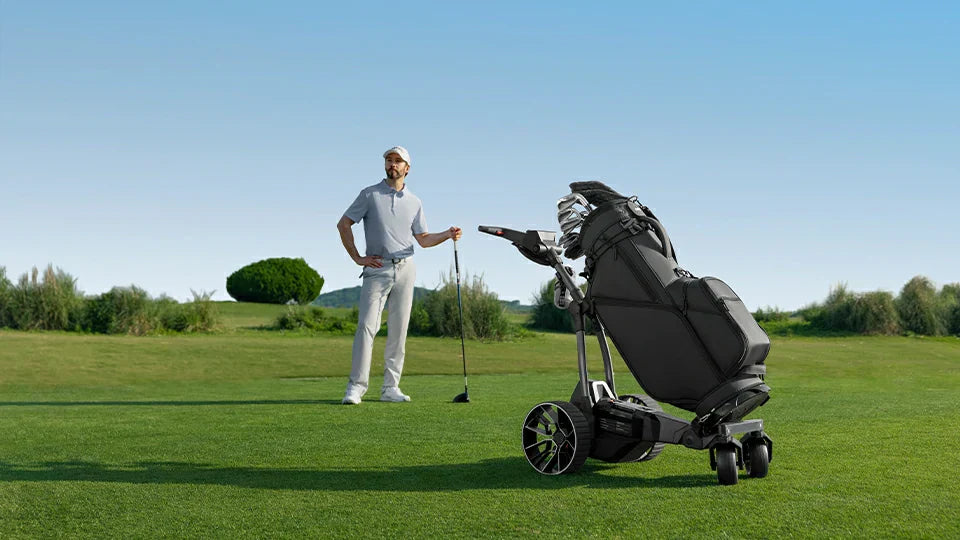
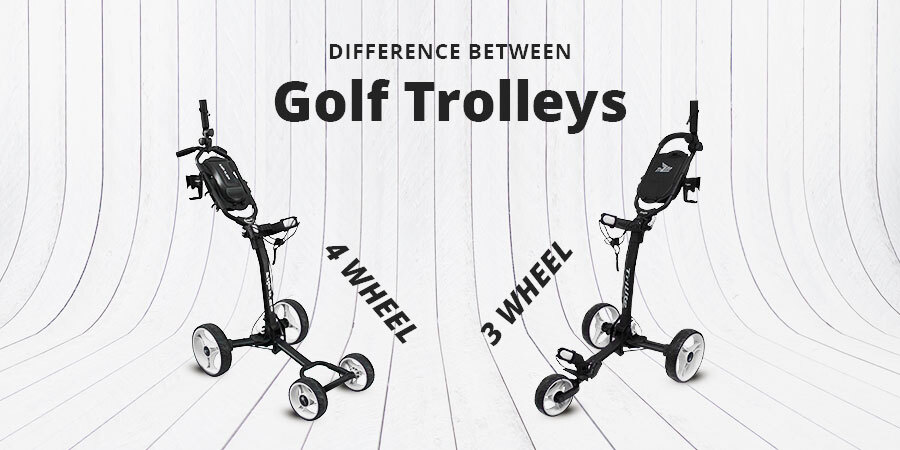
The frame geometry and wheel layout change how a cart feels. Three-wheel carts usually have one front wheel and two rear wheels. They pivot fast and track well at walking pace. Four-wheel carts spread the load and sit flatter. They feel calm and planted.
Most 3-wheel models weigh a bit less and fold in fewer steps. Most 4-wheel models add stability features and wider wheelbases. Bag straps, brake types, and handle heights vary by brand, not by wheel count.
The key trade-off in Push Cart 3-Wheel vs 4-Wheel is simple. You pick between turn speed and static stability. Your course, your bag, and your body should pick the winner.

Push Cart 3-Wheel vs 4-Wheel: Maneuverability and Handling
Three-wheel carts shine when you weave through tight spots. The single front wheel helps you pivot without lifting. They feel lively and quick.
Four-wheel carts steer fine, but the extra contact patch slows the pivot. They track straight with less input, which can reduce wrist strain on long walks.
What I notice on course:
- Tee box turns feel easier with 3 wheels. I can swing the nose with one hand.
- Long, straight walks feel easier with 4 wheels. The cart holds its line.
- On narrow bridges, both work, but 3-wheel needs less micro-correction.
If fast, light steering is your goal, 3-wheel wins. If you want calm, cruise-like tracking, 4-wheel has the edge. This is the core feel in Push Cart 3-Wheel vs 4-Wheel.

Push Cart 3-Wheel vs 4-Wheel: Stability, Safety, and Braking
Four-wheel carts resist tip forces better. The wider base spreads weight at rest and in side winds. On sidehill lies, they feel anchored. This matches what I see in practice and what many makers state in their specs.
Three-wheel carts can be very stable too. The best have wide rear stances and low bag mounts. But on steep, uneven lies, a 4th wheel reduces sudden roll.
What matters most for safety:
- Wheelbase width. Wider is better on slopes.
- Bag center of gravity. Heavy top pockets raise risk.
- Brake type. Hand brakes are easier to modulate on hills than foot brakes.
- Tire size. Larger, softer tires grip wet turf better.
My note from testing: with a top-heavy cart bag and a strong crosswind, my 3-wheel felt edgy on a 15% sidehill. My 4-wheel felt calm on the same line. That matters late in the round when your hands are tired.

Push Cart 3-Wheel vs 4-Wheel: Terrain and Weather
Pick based on your usual conditions. The right match keeps rounds smooth and stress-free.
- Hilly courses. Four-wheel carts hold lines better across slopes and on sharp downs. Less chance of drift or tip if you let go for a second.
- Flat parkland. Three-wheel carts roll fast and feel nimble. You will like the zip.
- Wet or windy days. Four-wheel carts plant better in gusts. Wider tires help on soaked turf.
- Rough or sandy patches. Big rear wheels help both styles. Four-wheel keeps the nose from diving.
For many golfers, terrain decides the Push Cart 3-Wheel vs 4-Wheel choice more than anything else.
Push Cart 3-Wheel vs 4-Wheel: Fold Size, Weight, and Transport
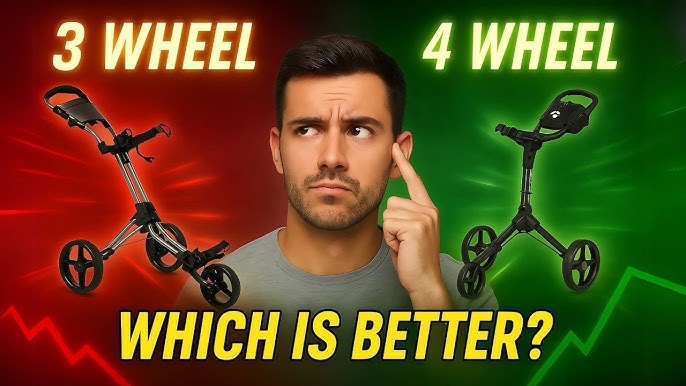
Weight and fold size often favor 3-wheel carts. Many sit in the 12 to 16 pound range. Four-wheel carts often run 14 to 20 pounds due to the extra wheel and supports. There are exceptions, but this is common.
What to check before you buy:
- Trunk fit test. Will it fit lengthwise with your bag? Many shops will let you try.
- Fold steps. Some 3-wheel carts fold in one motion. Some 4-wheel carts fold smaller but need two steps.
- Carry handle and balance. You will lift it many times a week. A centered handle matters.
Travel note: if you fly, look for compact fold, wheel guards, and a travel bag. Either style can travel well if it folds small and locks secure.
Push Cart 3-Wheel vs 4-Wheel: Features and Accessories
Features vary more by brand than by wheel count. Still, there are trends to watch.
Look for:
- Brake system. Hand brake at the handle is easier on hills.
- Handle adjust. You want a neutral wrist. Tall golfers need more range.
- Console storage. Scorecard, tees, phone, GPS mount space are key.
- Umbrella holder. Saves you on wet and sunny days.
- Cooler and seat options. Nice for long waits on busy days.
- Strap system. Upper and lower straps should hold a stand bag or cart bag without twist.
A well-equipped 3-wheel can beat a basic 4-wheel, and vice versa. In the Push Cart 3-Wheel vs 4-Wheel debate, features can flip the final choice.
Push Cart 3-Wheel vs 4-Wheel: Price and Value
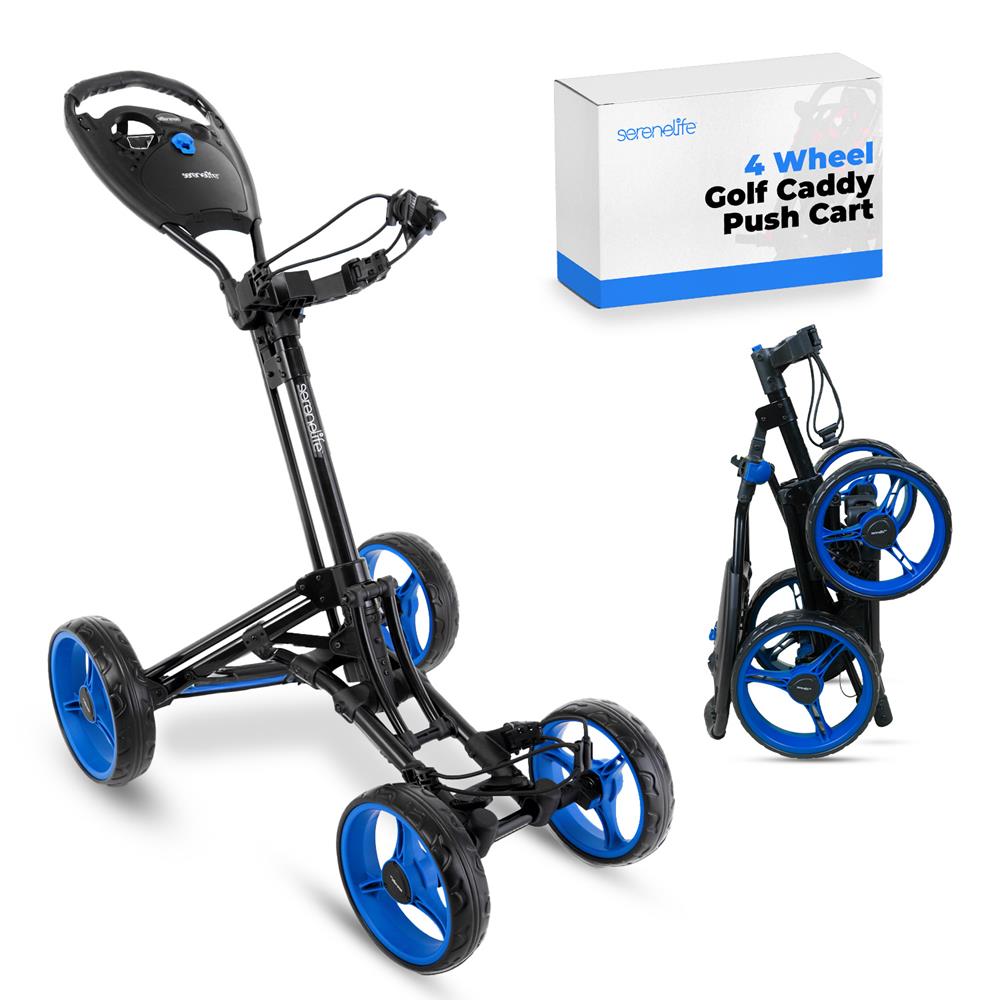
Prices overlap a lot. Entry to mid models for both styles often land in a similar range. Premium builds add better brakes, lighter metals, and smart mounts.
Think in value, not just price:
- If you need slope stability, a 4-wheel can save hassle and protect your bag.
- If you want speed and simple folding, a 3-wheel can feel better every step.
- If you walk 3 to 5 times a week, invest in build quality. Hinges and wheels will pay you back.
Value in Push Cart 3-Wheel vs 4-Wheel is tied to your use case. Match the cart to your routine.
Who Should Choose 3-Wheel vs 4-Wheel
Pick the cart that fits your body, course, and bag.
Choose a 3-wheel cart if:
- You play flat to gently rolling courses.
- You like quick turns and light steering.
- You want lighter weight and fast folding.
Choose a 4-wheel cart if:
- You play hilly or windy courses.
- Your bag is heavy or top-loaded.
- You want a calm, planted feel on sidehills.
If you are on the fence, borrow both for one round each. That first hour settles the Push Cart 3-Wheel vs 4-Wheel question fast.

Real-World Tests and Personal Notes
Over two seasons, I walked 25 rounds with a top 3-wheel and 22 rounds with a top 4-wheel on the same courses. The 3-wheel saved a few seconds on every tee box turn. The 4-wheel saved my wrists on long sloped fairways. My scores were the same. My stress level was not.
On rain days with a crosswind, the 4-wheel felt safer when I parked near bunkers or greens. On dry, flat days, the 3-wheel made the walk feel easy and fun. That is my honest split in Push Cart 3-Wheel vs 4-Wheel head-to-head use.
Bias note: I prefer light, simple gear. Even with that bias, I keep a 4-wheel for mountain courses.
Setup, Maintenance, and Safety Tips
A few small habits make any cart better.
- Balance the bag. Put heavy items low. Move balls to lower pockets on hill days.
- Check tire pressure or tread. Soft or worn tires wander and slip.
- Tighten hardware monthly. Hinges and wheel axles need care.
- Adjust handle height. Keep wrists straight to reduce strain.
- Use the brake, always. Engage it on any slope, even short stops.
These basics matter for both styles in the Push Cart 3-Wheel vs 4-Wheel choice. Treat the cart well and it will treat you well.
Buying Checklist for Push Cart 3-Wheel vs 4-Wheel
Use this list when you test carts in person.
- Course type. Flat, hilly, windy, or mixed.
- Bag fit. Stand bag legs and base must sit stable.
- Fold test. One-hand fold, lift, and trunk fit.
- Brake feel. Hand brake travel and lock strength.
- Handle adjust. Fits your height and stride.
- Wheelbase width. Enough for sidehill confidence.
- Tire size and material. Grip on wet turf.
- Storage console. Holds phone, GPS, tees, and card.
- Accessory mounts. Umbrella, seat, cooler ready.
- Weight and carry handle. Easy in and out of the car.
Check these boxes and your Push Cart 3-Wheel vs 4-Wheel decision becomes clear and easy.
Frequently Asked Questions of Push Cart 3-Wheel vs 4-Wheel
Which is better for beginners?
A 4-wheel cart is often easier for new walkers. It feels stable and forgiving on slopes and in wind.
Are 4-wheel carts always heavier?
Usually, but not always. Many 4-wheel carts add one to three pounds over a similar 3-wheel model.
Do 3-wheel carts tip over more?
They can on sharp sidehills with top-heavy bags. Good wheelbase width and low bag weight reduce that risk.
Which folds smaller for travel?
Many 3-wheel carts fold in fewer steps. Some premium 4-wheel carts fold smaller in volume. Always test in your trunk.
What brake type should I choose?
A hand brake near the handle is best for hills. It is faster to set and release than a foot brake.
Will a stand bag fit both styles?
Yes, if the upper and lower straps are adjustable. Look for cradles that stabilize stand bag legs.
Conclusion
You now know the core trade-off. Three wheels give you quick turns and easy steering. Four wheels give you a planted feel and steady control on slopes and in wind. Match the cart to your course, bag, and body, and either choice will serve you well.
Try both if you can. Walk nine holes with each and note your wrist strain, parking ease, and fold routine. Then choose with confidence and enjoy more happy, healthy miles on the course. Ready to go deeper? Explore our other walking gear guides, subscribe for more testing notes, or drop your Push Cart 3-Wheel vs 4-Wheel question in the comments.