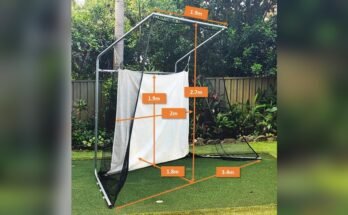
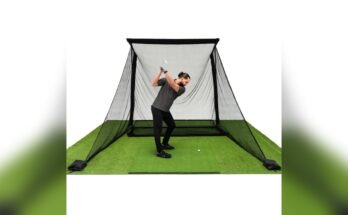
Practicing golf at home has never been more popular. Many golfers set up a golf practice net in their backyard, garage, or even inside their living room. This simple tool helps you work on your swing, improve accuracy, and stay sharp between rounds. But one question comes up again and again: How far should you stand from a golf practice net? Stand too close, and you risk damaging your net (or yourself). Stand too far, and your practice becomes less realistic. This guide will help you find the right distance, avoid common mistakes, and get the most out of your net.
Why Distance From The Net Matters
The space between you and your practice net is not just a matter of comfort. It affects your safety, the net’s durability, and the quality of your practice.
When you stand at the right distance, your shots land in the net softly, reducing the risk of bounce-back. If you’re too close, powerful shots can rebound dangerously or even break the net. If you’re too far, there’s a higher chance the ball might miss the net entirely.
The correct distance also makes your practice more realistic. It lets you use your clubs naturally, and you can swing at full speed without hesitation. This way, your practice transfers better to the golf course.
Standard Guidelines For Standing Distance
Most manufacturers recommend a distance of 8 to 10 feet (about 2.5 to 3 meters) from the net. This range fits most golfers, but there are some important details to consider.
Here’s a quick comparison of recommended distances for different practice scenarios:
| Club Type | Recommended Distance | Why |
|---|---|---|
| Wedges/Short Irons | 7-8 feet | Lower ball speed, less risk of rebound |
| Mid/Long Irons | 8-9 feet | Higher speed, need more buffer |
| Driver/Fairway Woods | 10+ feet | Maximum force, extra safety needed |
Notice that the distance changes based on the club you use. For short irons and wedges, the ball speed is lower, so you can stand a bit closer. With a driver, you need more space.
Factors That Affect The Ideal Distance
Choosing the right distance is not the same for everyone. Here’s what you should consider:
1. Net Size And Strength
A small or weak net will not handle fast shots from close range. If your net is compact (for example, 6 feet wide), you may need to stand closer but swing softer. If your net is heavy-duty and large (10 feet or more), you can step back and swing at full power.
2. Type Of Ball Used
Some golfers use foam practice balls or plastic training balls at home. These are lighter and safer, so you can stand a bit closer without worry. If you use real golf balls, always give yourself extra room—especially with powerful clubs.
3. Swing Speed
A beginner with a slow swing can stand a bit closer. A strong, advanced player should step back further to avoid damaging the net or causing dangerous rebounds. Most nets are tested for average swing speeds around 80-100 mph. If you swing faster than this, give yourself more space.
4. Environment
If you practice indoors, your space may be limited. Always leave enough room behind you to swing safely, and enough room in front so the ball does not bounce back off nearby walls.
5. Club In Use
Don’t use the same distance for every club. Your swing arc and ball speed are different with each club.
6. Net Design
Some nets have a deep pocket or double-layer design to absorb shots better. With these, you can stand a bit closer. Flat nets with little give require you to stand further back.
How To Measure And Set Up The Right Distance
Measuring the correct distance is simple if you follow these steps:
- Place your net on a flat surface, making sure it’s fully open and stable.
- Mark a spot 8 feet from the net using a tape measure.
- Stand at this mark and check your swing. Make sure your club does not touch the net or the ground in front of it.
- If you’re using a driver, move your mark to 10 feet.
- Take a few gentle swings first to see how the ball reacts.
- Adjust forward or backward as needed until you feel safe and comfortable.
If you’re practicing indoors, measure your space first. If you have only 12 feet from wall to wall, you may have to use shorter clubs or training balls.
Common Mistakes To Avoid
Many golfers make simple errors when setting up their practice net. Watch out for these:
- Standing too close: This increases the risk of the ball bouncing back dangerously.
- Standing too far: You might miss the net entirely, especially with off-center shots.
- Ignoring club choice: Using a driver at the same distance as a wedge can damage your net.
- Not checking surroundings: Items or windows near your net could break if a ball escapes.
- Failing to secure the net: A lightweight net can tip over if hit too hard.
Adapting Distance For Different Practice Goals
Your distance from the net can change based on your practice goals.
Short Game Practice
If you want to practice chipping or pitching, stand a bit closer. Use 7-8 feet as your guide. These shots are slower and safer.
Full Swing Practice
For a full swing with mid irons, use 8-9 feet. For woods and drivers, move to 10 feet or more.
Accuracy Drills
If you want to test your aim, stand at your normal full swing distance but use targets (like tape or a towel) on the net.
Speed Training
If you’re working on swing speed, always stand further back and check your net’s maximum speed rating.

Real-world Examples
Let’s look at how different golfers set up their nets:
- Beginner golfer: Uses foam balls indoors, stands 7 feet from a small net.
- Intermediate golfer: Practices with real balls in the garage, stands 8 feet with irons and 10 feet with a driver.
- Advanced golfer: Uses a heavy-duty outdoor net, stands 12 feet back, swings at full speed.
These examples show that there is no one-size-fits-all answer, but the guidelines above will fit most situations.
How Net Material And Construction Affect Distance
Not all nets are built the same. The material and construction can change the safe distance.
| Net Material | Recommended Distance | Comment |
|---|---|---|
| Nylon mesh | 8-10 feet | Strong and flexible, good for most clubs |
| Polyester | 9-12 feet | Less stretch, needs more space for fast shots |
| Double-layered | 7-9 feet | Extra safety, absorbs energy well |
Double-layered nets or deep pockets allow for a closer stance. Thin, single-layer polyester requires more caution.
Indoor Vs Outdoor Practice Nets
The available space can change your setup.
- Indoor practice: Most rooms are small, so you may have to stand closer and use only wedges or foam balls.
- Outdoor practice: You have more space, so stand as far as you need for a full swing. You can use real balls safely.
Always check your ceiling height indoors. You need enough clearance for your club on both the backswing and follow-through.
Safety Tips For Using A Practice Net
Safety should always come first. Here’s how to protect yourself and your surroundings:
- Use real golf balls only if your net is rated for them.
- Always check for tears or weak points in your net before practicing.
- Make sure the net is anchored or weighted down so it doesn’t tip over.
- Never stand closer than 7 feet, even for slow shots.
- If you use real balls indoors, protect windows and fragile items.
- Keep children and pets away from the practice area.

Maintenance For Longevity
Your net will last longer if you care for it properly. Here are some tips:
- Inspect regularly for holes or worn spots.
- Store indoors when not in use, especially if your net is not weatherproof.
- Avoid wet conditions, as moisture can weaken the material.
- Rotate net panels if possible, so one spot does not wear out faster.
- Clean with mild soap and water if the net becomes dirty.
A well-maintained net can last for years, making your investment worthwhile.
Extra Insights Most Beginners Miss
Many new golfers forget about the angle of the net. If your net is angled slightly back, it absorbs shots better. This simple adjustment can make a big difference in safety and net life.
Another tip: mark your stance spot on the ground with tape or a mat. This helps you stand at the right distance every time, even if you move the net.
When To Move Closer Or Farther
You can change your distance for special situations:
- Move closer if you use foam balls or practice slow chip shots.
- Move farther if someone else is watching, you use a new club, or your net shows signs of wear.
Always start with the recommended distance, then adjust for comfort, safety, and your practice goals.
For Coaches And Families
If you teach golf or have kids using the net, extra care is needed:
- Always supervise children.
- Use foam balls for young players.
- Mark safe zones so everyone knows where to stand.
This ensures everyone enjoys practice without accidents.

External Resource
For a deeper look at home golf nets, their construction, and safety, check out this guide from the Wikipedia Golf Training Aids page.
Frequently Asked Questions
How Far Should I Stand From A Golf Practice Net With A Driver?
With a driver, you should stand at least 10 feet from the net. This gives the ball enough space to slow down and reduces the risk of bounce-back or missing the net. Make sure your net is rated for high-speed shots.
Is It Safe To Use Real Golf Balls In A Practice Net Indoors?
It can be safe if your net is designed for real golf balls and your space allows for a full swing. Always check the net’s strength, anchor it well, and leave enough room behind you and around the net. Foam balls are safer for indoor use.
Can I Stand Closer If I Use Foam Or Plastic Balls?
Yes, you can usually stand 1-2 feet closer when using foam or plastic balls. These balls are lighter and slower, so they won’t damage the net or bounce back dangerously.
What If My Room Is Too Small For The Recommended Distance?
If your room is small, use shorter clubs (like wedges), swing slower, or use foam balls. Never compromise safety by standing too close with real balls and fast swings. You can also look for compact nets designed for small spaces.
How Do I Know If My Net Is Strong Enough For Real Balls?
Check the manufacturer’s rating for your net. Look for terms like “real ball compatible” or “driving rated.” Double-layer or deep-pocket nets are usually safer for high-speed shots. Inspect your net regularly for signs of wear.
—
Practicing with a golf net at home is a great way to improve your game, but only if you use it safely and wisely. The right standing distance depends on your net, your clubs, your space, and your goals. Start with the basic guidelines, adjust for your situation, and always put safety first.
With smart setup and a little care, your practice net will help you build confidence and skill—right in your own backyard.