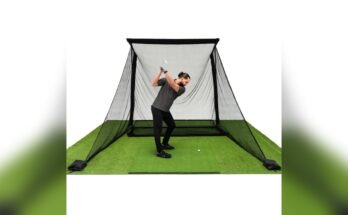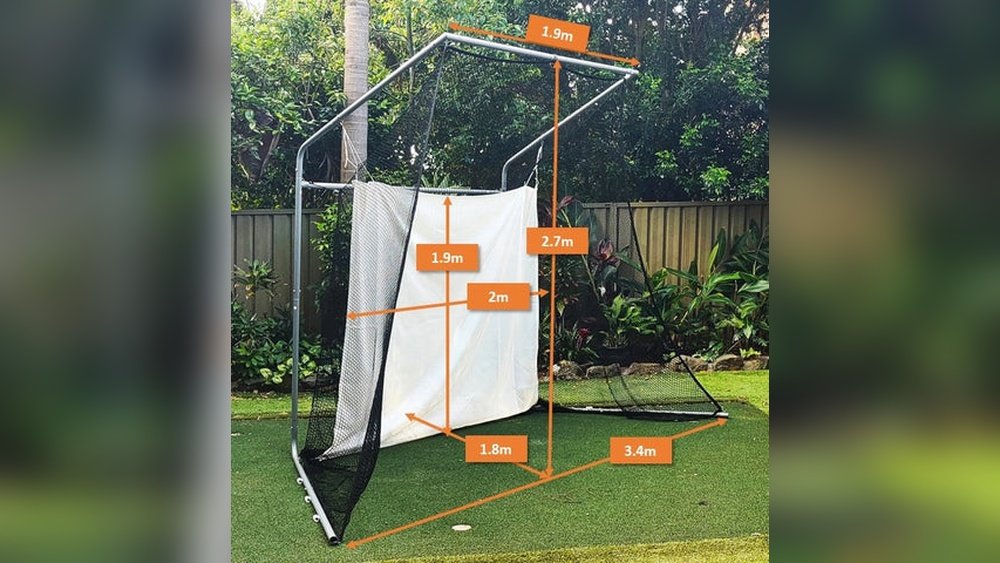
Practicing golf at home is now easier than ever, but it can be confusing to choose the right golf practice net. One of the biggest questions people have is: How big should a golf practice net be? The answer depends on your goals, space, and safety needs. Let’s explore everything you need to know, so you can make a confident choice and get the most out of your practice.
Why Size Matters In A Golf Practice Net
The size of your golf practice net affects more than just how it looks in your backyard or garage. The right size can help you practice every type of shot, protect your property, and feel safe swinging hard. If your net is too small, you risk missing shots or damaging walls, windows, or even neighbors’ property. If it’s too big, it might not fit your space—or your budget.
Many beginners focus only on price or style and ignore size, but this is a mistake. Choosing the right size is essential for effective, safe practice.
Standard Golf Practice Net Sizes
Golf practice nets come in several standard sizes. Here’s a quick overview:
| Net Size (Width x Height, Feet) | Best For | Typical Location |
|---|---|---|
| 7 x 7 | Beginner practice, limited space | Indoor, small backyard |
| 10 x 7 | Full swings, irons, woods | Garage, medium backyard |
| 12 x 10 | Advanced, all clubs | Large garage, backyard |
| 15 x 10 | Multiple players, maximum safety | Golf simulator room, big backyard |
Most home golfers choose between 7 x 7 feet and 10 x 7 feet nets. For advanced players or those using drivers, a bigger net is often better.
Key Factors That Determine The Right Size
Choosing the best size is not just about personal preference. You need to consider:
- Club Selection – Will you use only irons or also drivers? Drivers need more space.
- Ball Flight – Higher shots need taller nets.
- Skill Level – Beginners often miss the center, so bigger nets give more safety.
- Space Available – Measure your room or yard before buying.
- Purpose – Are you working on chipping, full swings, or using a golf simulator?
Let’s look at these in more detail.
1. Club Selection
If you use only short irons or wedges, a 7 x 7 feet net can be enough. But if you want to practice with a driver or fairway wood, aim for at least 10 feet wide and 7 feet tall. These clubs hit balls faster and can miss the net more easily.
2. Ball Flight
Some golfers hit low, straight shots. Others hit high fades or draws. If you tend to hit high, always choose a taller net. A height of 9-10 feet is safer for full swings, especially indoors.
3. Skill Level
Beginners and high-handicap golfers rarely hit the center of the net every time. If this is you, buy a net that is at least a few feet wider than your swing zone. This will reduce the risk of missing the net.
4. Space Available
Never guess your available space. Use a tape measure to check the width, height, and depth of your practice area. Remember to allow room for your swing and for standing behind the ball.
5. Purpose
- For chipping and short shots: Small nets (5-6 feet wide) can work.
- For full swings: At least 7-10 feet wide and 7-10 feet tall.
- For simulator setups: 10-15 feet wide and 9-10 feet tall is ideal.
Comparing Popular Golf Net Sizes
To make this clear, here’s how common net sizes compare for different uses:
| Size (Feet) | Good For | Clubs Supported | Safety |
|---|---|---|---|
| 7 x 7 | Chipping, beginners | Wedges, short irons | Basic |
| 10 x 7 | Full swing practice | All irons, some woods | Good |
| 12 x 10 | Advanced, simulators | All clubs | High |
| 15 x 10 | Coaching, multiple users | All clubs | Maximum |
What Happens If The Net Is Too Small?
Many golfers buy the smallest net to save money or fit a tight space. This can be risky. Here’s what can go wrong:
- Missed shots might damage walls, windows, or cars.
- Small nets make you swing softly, hurting your training.
- You might lose confidence in your practice area.
- Neighbors or family members may get upset if a ball escapes.
A small net could be enough for putting and chipping, but not for full swings, especially with a driver.
What Happens If The Net Is Too Big?
A big net offers more safety, but there are drawbacks:
- It may not fit your space, especially indoors.
- Large nets are harder to set up and move.
- They cost more and may look awkward in small rooms.
For most home golfers, the goal is to find a net that is large enough for safety, but not so big it causes problems.
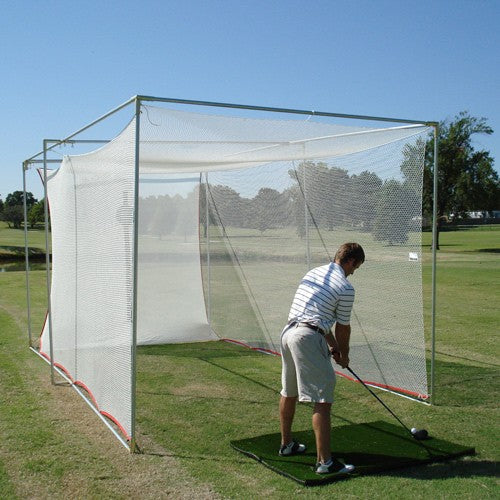
How To Measure Your Space
Before buying, measure three things:
- Width: The area must be wider than the net, plus room to swing a club.
- Height: Make sure the ceiling is high enough, especially indoors.
- Depth: You need room behind the net so balls don’t hit walls.
A common mistake is forgetting the swing arc—your backswing and follow-through need extra space behind and beside the net.
Special Considerations For Indoor Vs. Outdoor Use
Indoor Practice
- Ceiling height is the limiting factor.
- Choose nets at least 7 feet tall, but ideally 9-10 feet.
- Make sure the net’s depth is enough to catch balls without hitting walls.
- Use foam or practice balls if space is tight.
Outdoor Practice
- You have more space, so bigger nets are possible.
- Consider wind—choose a stable net.
- For shared yards, use a wider net to protect windows, cars, and neighbors.
Golf Simulator Nets
If you plan to use a launch monitor or golf simulator, the size matters even more. Most simulators need a minimum of 10 feet wide and 9 feet high. Projector screens require extra space. Always check the manufacturer’s recommendations. Many simulator owners use nets that are 12-15 feet wide for full coverage.
Safety Tips For Home Golf Nets
A golf ball can travel up to 150 mph (240 km/h). A net must be big enough to catch even off-center shots. Here are safety tips:
- Always check the net for holes or tears before use.
- Make sure the frame is sturdy.
- Keep at least 3 feet of space behind the net, if possible.
- Never let children or pets play behind the net.
One insight: Many people forget to check the ground. If you practice on concrete, balls can bounce and escape under the net. Use a mat or place the net on grass or carpet.

When To Consider Custom Or Commercial Nets
If you have unique needs—such as coaching multiple players, using high-speed launch monitors, or protecting a wide area—custom nets may be worth the investment. These can be 20 feet wide or more, and up to 12 feet tall. For most golfers, though, a standard net is enough.
Real-world Examples
- Garage Setup: A 10 x 7 net fits most standard garages. You can practice full swings with all clubs.
- Apartment Balcony: A 5 x 5 or 7 x 7 net is best, but use only foam balls for safety.
- Backyard Practice: If you have space, choose a 12 x 10 or 15 x 10 net. You can hit real balls with peace of mind.
Common Mistakes When Choosing Size
- Not measuring space first – Always measure before you buy.
- Ignoring the swing arc – Your swing needs more space than you think.
- Choosing based on price only – Cheaper, smaller nets can be unsafe.
- Forgetting about neighbors – Make sure your net protects their property, too.
How To Set Up Your Net For Maximum Safety
- Place the net in an area with no windows, cars, or people behind it.
- Angle the net slightly toward you, so balls drop down.
- Anchor the net to the ground if used outdoors.
- Add side barriers if you miss left or right often.

Maintenance And Longevity
Bigger nets often last longer because balls are less likely to hit the same spot repeatedly. Still, check your net often for wear. UV light and weather can weaken outdoor nets over time.
For the most durable options, look for nets made from knotless polyester or nylon. These materials resist tearing and last for years.
What Size Do Pros Use?
Many professionals use nets that are at least 10 feet wide and 10 feet high. This allows them to practice with any club, at full speed, with maximum safety. If you want a “pro” experience at home, follow their example and choose a larger net.
Cost Vs. Size
Larger nets cost more. Here’s a rough guide:
- 7 x 7 feet: $70–$120
- 10 x 7 feet: $120–$250
- 12 x 10 feet: $250–$400
- 15 x 10 feet: $400+
Remember, buying the right size is cheaper than paying for broken windows or injuries.
Summary Table: What Size Is Right For You?
Here’s a quick reference for choosing your net size:
| Practice Type | Recommended Net Size | Notes |
|---|---|---|
| Chipping only | 5 x 5 ft | Use foam balls indoors |
| Irons and short clubs | 7 x 7 ft | OK for small spaces |
| Full swings (all clubs) | 10 x 7 ft or larger | Best for garages/backyards |
| Simulator or multi-user | 12 x 10 ft or larger | Maximum coverage |
Final Thoughts
The perfect golf practice net size depends on your goals, skill level, and space. For most home golfers, a 10 x 7 feet net provides a safe, flexible solution. If you’re serious about improving, want to use all your clubs, or plan to use a simulator, choose a larger net, such as 12 x 10 feet or more.
Don’t let price or appearance be your only guide. Take time to measure your space, think about your safety, and choose a net that helps you practice confidently. For more information about home golf practice, you can visit the Wikipedia page on golf training aids.
Frequently Asked Questions
What Is The Best Size For A Beginner’s Golf Practice Net?
For most beginners, a 7 x 7 feet net is a good starting point. It’s big enough for chipping and short irons, and fits in most spaces. If you plan to use drivers or woods, a larger net is safer.
Can I Use A Golf Practice Net Indoors?
Yes, you can use a net indoors if you have enough space. The ceiling should be at least 9 feet high for full swings. Always measure your room and allow extra space for your swing and follow-through.
Is A Bigger Net Always Better?
Not always. Bigger nets are safer, but they need more space and cost more. The best net is one that is large enough to catch all your shots, but small enough to fit your practice area comfortably.
How Do I Prevent Balls From Missing The Net?
Choose a net that is wider and taller than your swing zone. Set up the net in a safe area, and consider adding side barriers if you often miss left or right. Always check for holes or weak spots in the net.
What Material Should I Look For In A Durable Golf Net?
Look for nets made of knotless polyester or nylon. These materials are strong, resist tearing, and last longer than cheaper options. For outdoor use, UV protection is also important.
By thinking carefully about the size and quality of your golf practice net, you’ll set yourself up for safe, effective practice and real improvement in your game.