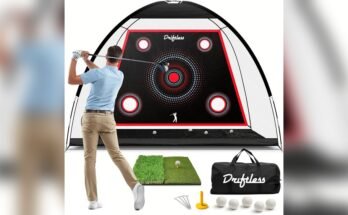
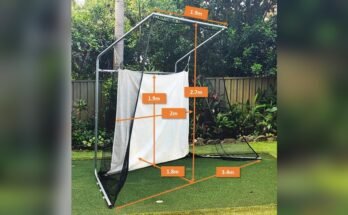
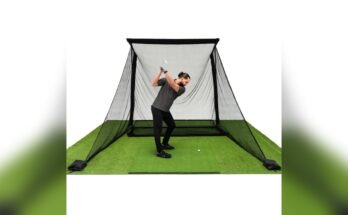
If you love golf but struggle to find time for the course, practicing at home can be a game-changer. Many golfers wonder: Can golf practice nets be used in a garage? This question matters because garages are common spaces—protected from the elements, often unused, and potentially perfect for golf practice. But is it safe, practical, and effective? Let’s explore all aspects so you can confidently decide if your garage is ready for golf.
Why Use A Garage For Golf Practice?
Practicing golf at home is convenient, but not everyone has a big backyard. The garage offers several advantages:
- Weather protection: Rain, wind, or extreme temperatures won’t interrupt your practice.
- Privacy: No neighbors or passersby to distract you.
- Control: You can set up mats, nets, and even simulator screens.
However, garages also have challenges. Space is often limited, ceilings can be low, and you must protect your car and belongings. But with the right net and setup, many golfers successfully turn their garage into a mini driving range.
Types Of Golf Practice Nets Suitable For Garages
Different nets fit different spaces and needs. Here are the most common types:
- Pop-up nets: Lightweight, easy to assemble and move. Good for small garages.
- Permanent frame nets: Stronger, often larger. Require more space and time to set up.
- Multi-use nets: Designed for golf and other sports. Helpful if your family plays multiple games.
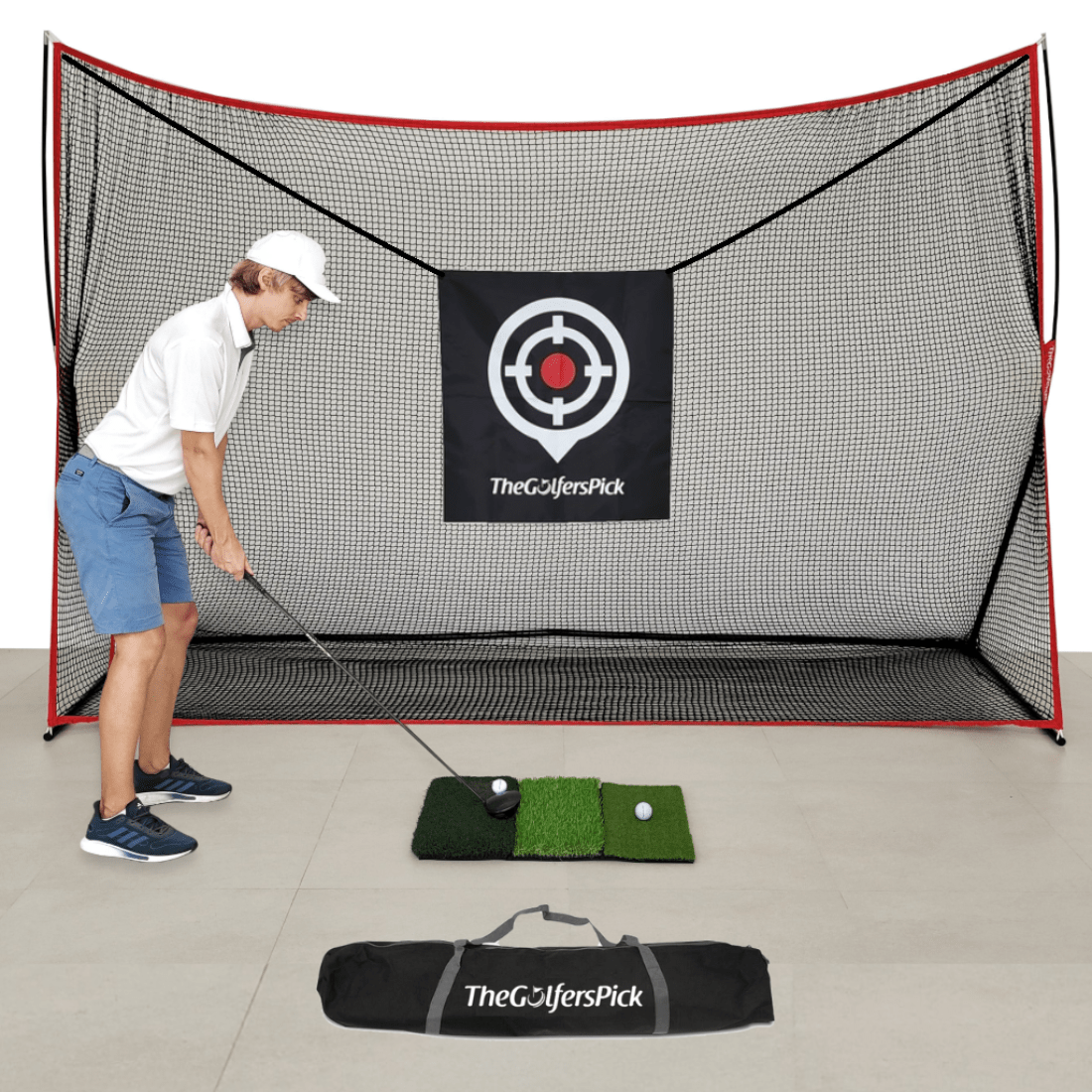
Below is a comparison of typical net types for garages:
| Type | Size Range | Assembly | Durability | Ideal Garage Size |
|---|---|---|---|---|
| Pop-up Net | 5’x7′ to 7’x10′ | Quick | Medium | Single-car |
| Permanent Frame | 8’x12′ and up | More time | High | Double-car |
| Multi-use Net | 6’x8′ to 8’x10′ | Moderate | Medium | Single or double-car |
Garage Space Requirements
Before buying a net, measure your garage carefully. Here’s what you need to consider:
- Width: Most nets require at least 7 feet.
- Height: Swinging a driver needs 8-10 feet of ceiling clearance.
- Depth: You need room for your backswing and follow-through. A minimum of 15 feet is best.
If your garage is smaller, you can use shorter clubs like wedges or irons and practice chipping instead of full swings.
Practical Example
Let’s say your garage is 20 feet long, 10 feet wide, and 9 feet high. You can fit a mid-size net and practice with all clubs except maybe the driver. If your garage is smaller, focus on short game.
Setting Up A Golf Practice Net In Your Garage
Proper setup is key for safety and enjoyment. Follow these steps:
- Clear the area: Move cars, bikes, and fragile items away.
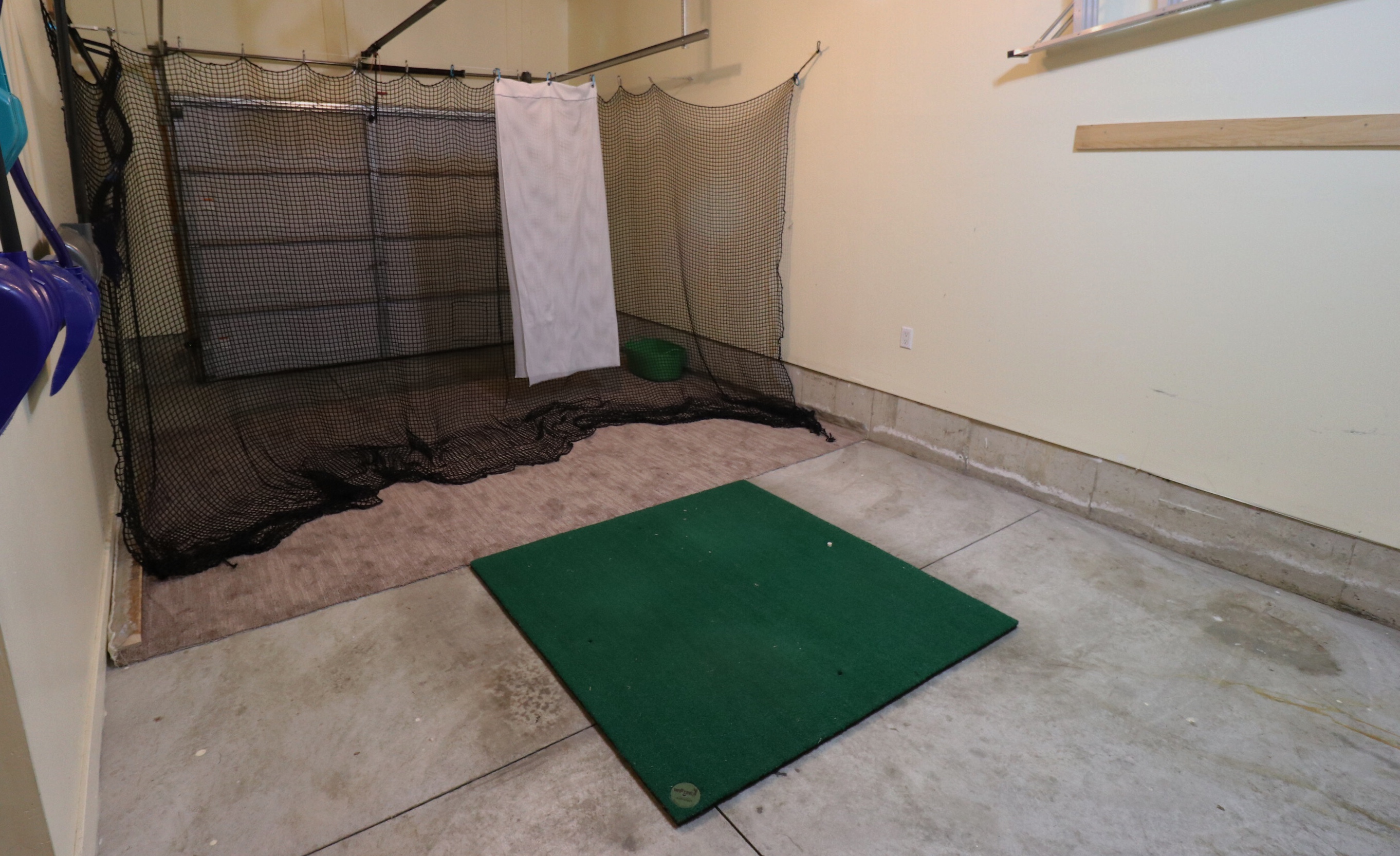
- Lay down a hitting mat: Protect the floor and your clubs.
- Assemble the net: Follow instructions carefully. Anchor the net if possible.
- Add targets: Some nets come with built-in targets; others can be customized.
- Check clearance: Swing a club to ensure nothing is in your way.
A common mistake is failing to secure the net. If the net moves during impact, balls can escape and damage walls or cars.
Safety Considerations
Safety is the top priority. You must protect your home, your car, and yourself. Here are things to watch for:
- Ball containment: Make sure the net is strong enough to stop fast shots.
- Anchoring: Secure the net to the floor or walls to prevent tipping.
- Protecting surroundings: Cover nearby windows or objects with padding.
- Distance from net: Stand 6–8 feet from the net for best results.
Some golfers use foam or plastic practice balls instead of real golf balls for extra safety. This is especially helpful in garages with less space.
Benefits Of Garage Golf Practice
Using a net in your garage offers several unique advantages:
- Year-round practice: Weather is never a problem.
- Time savings: Practice anytime, even for 10 minutes.
- Skill improvement: Repetition builds muscle memory.
- Family fun: Kids and friends can join in, making practice social.
One less obvious benefit is that garage practice can help you work on swing mechanics without distraction. You focus on form, not distance.
Challenges And Limitations
Not every garage is perfect for golf. Here are common issues:
- Space constraints: You may not swing all clubs freely.
- Noise: Hitting balls can echo loudly.
- Temperature: Garages can be hot in summer or cold in winter.
- Lighting: Poor light affects visibility and safety.
Some golfers solve these issues by adding heaters, fans, or extra lights. For noise, rubber mats help dampen sound.
Choosing The Right Golf Practice Net
Picking the right net is crucial. Here’s what to look for:
- Size: Match your garage dimensions.
- Strength: Choose nets rated for real golf balls.
- Ease of setup: If you plan to move the net often, choose a pop-up style.
- Price: Nets range from $50 to over $500.
Another non-obvious factor: Check if the net is easy to clean. Garages get dusty, and nets can collect debris.
Here’s a comparison of popular golf nets for garage use:
| Brand | Size | Ball Type | Price Range | Assembly Time |
|---|---|---|---|---|
| Rukket Sports | 7’x10′ | Real/Practice | $150-$300 | 10-15 min |
| The Net Return | 8’x12′ | Real | $400-$600 | 20-30 min |
| GoSports | 6’x8′ | Practice | $80-$150 | 5-10 min |
Practical Tips For Garage Golf Practice
To get the most from your garage golf net, follow these practical tips:
- Use a hitting mat: Protect both clubs and floor.
- Install good lighting: LED shop lights are affordable and bright.
- Keep the area clean: Dust and dirt reduce net life and safety.
- Mark your swing zone: Use tape or chalk to stay centered.
- Check regularly for wear: Replace nets when holes appear.
Many golfers also install a mirror or video camera to check their swing. This helps you spot mistakes and improve faster.
Garage Golf Net Setup Mistakes To Avoid
Even experienced golfers make mistakes. Here are common errors:
- Ignoring ceiling height: Many garages are too low for drivers.
- Not securing the net: Loose nets can tip or shift.
- Using real balls with weak nets: Leads to damage and accidents.
- Practicing too close: Can cause ricochets.
- Forgetting ventilation: Garages can get stuffy.
Always double-check measurements and anchor points before you swing.
Alternatives And Enhancements
If your garage isn’t ideal, consider these alternatives:
- Short game nets: Practice chipping if space is limited.
- Foam balls: Lower risk of damage.
- Portable simulators: Combine nets with launch monitors for detailed feedback.
Some golfers use projector screens for virtual golf. This makes garage practice more fun and realistic. For more on golf simulators, check Golf Digest.
Real-life Examples
Many golfers share their garage setups online. For example, one golfer in Texas installed a Rukket Sports net in his single-car garage, used foam balls, and added a mat with alignment lines. He practices daily, even when it’s raining outside.
Another golfer in Canada uses a permanent net and a heater during winter. He says garage practice helped him reduce his handicap by 2 strokes in one year.

Is Garage Golf Practice Right For You?
If you want to improve your game and make use of your garage, a practice net can be a great solution. But you need to measure your space, think about safety, and choose the right net. With proper setup, garage golf practice is safe, effective, and enjoyable.
If you’re serious about your game and space is available, give it a try—you may be surprised how much you improve.
Frequently Asked Questions
Is It Safe To Use Golf Practice Nets In A Garage?
Yes, it’s safe if you follow guidelines: use strong nets, secure them properly, keep fragile items away, and stand at the recommended distance. Foam balls add extra safety, especially in small spaces.
What Size Net Is Best For A Garage?
Most single-car garages fit nets around 7’x10′. Measure your garage before buying. Double-car garages allow for bigger nets and full swings.
Can I Use Real Golf Balls Indoors?
You can use real balls if the net is rated for them and the space is safe. In smaller garages, foam or plastic balls are better to prevent damage.
How Do I Protect My Garage Floor?
Use a golf hitting mat under the net. Mats protect both clubs and floors, and reduce noise. Avoid practicing directly on concrete.
Will Garage Golf Practice Help My Game?
Definitely. Consistent practice builds muscle memory and improves swing mechanics. Many golfers see improvement after a few weeks, especially with regular feedback and video analysis.
With the right net and setup, your garage can become a reliable practice space, helping you stay sharp and enjoy golf year-round.