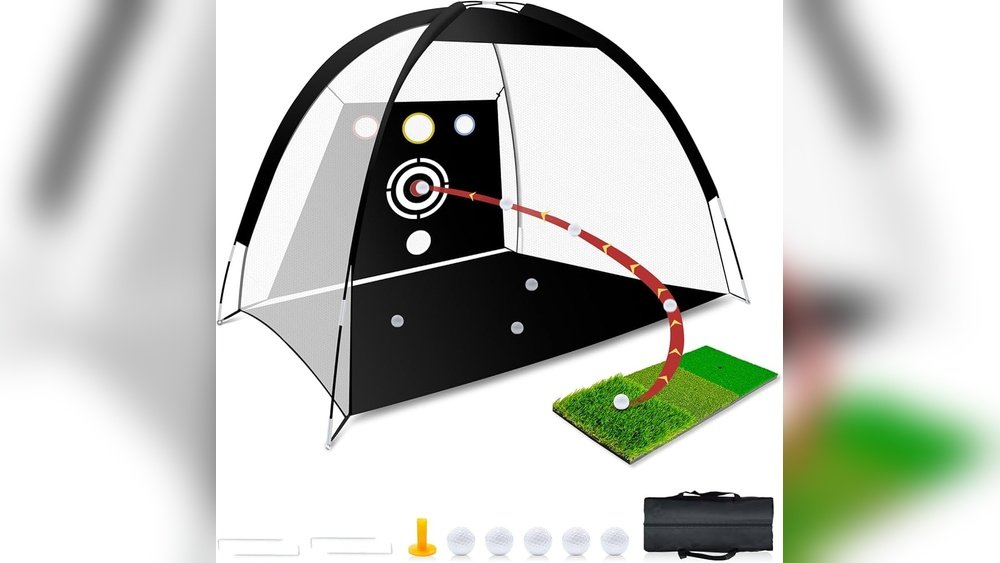
Golfers know that practice is key to improving their swing, accuracy, and confidence. But not everyone has the time or space to visit a driving range every day. This is where golf practice nets come in. They promise a way to hit real golf balls at home, in your backyard, or even indoors—without breaking windows or losing balls. But can these nets really stop real golf balls traveling at high speed? Or are they only safe for lightweight practice balls? Let’s explore what makes a golf practice net effective, what to look for, and how to use them safely.
How Golf Practice Nets Work
A golf practice net is a mesh barrier designed to catch and stop golf balls after you hit them. Most nets are made from nylon, polyester, or a blend of strong synthetic fibers. Some are simple squares, while others come with frames, target sheets, or even side wings. The main idea is simple: you hit the ball, and the net absorbs the force.
Key factors that allow a net to stop a real golf ball include the material strength, the weave density, and the overall design. If any of these are weak, the ball can rip through, bounce back dangerously, or cause damage nearby. Not all practice nets are equal, and understanding the differences is vital for safe home practice.
Do Golf Practice Nets Stop Real Golf Balls?
Material Strength And Durability
The ability of a net to stop a real golf ball depends first on its material. High-quality nets use knotless nylon or heavy-duty polyester. These materials are strong enough to handle repeated impacts from balls traveling at 100–150 mph, which is the typical speed of a full driver shot.
Cheaper nets or lightweight models often use thin mesh, which may be fine for foam or plastic balls but not for real ones. When you plan to use real golf balls, always check for a net that clearly states “suitable for real golf balls” or “driver safe.
”
Weave And Layering
The weave of the net is just as important as the material. A tighter mesh means less chance for a ball to slip through or for the net to tear. Many top nets use a double or triple-layer design, with overlapping sheets or reinforced strike zones where balls hit most often.
Some premium nets go further, adding a target sheet or back panel to absorb even more energy. This layering not only stops the ball but also reduces bounce-back risk—a real concern for indoor practice.
Frame And Stability
A strong net is only part of the solution. If the frame is weak, the whole structure can tip over or collapse. The best golf practice nets use steel frames or heavy fiberglass poles. Stability features like ground stakes, sandbags, or wide bases are also important, especially if you plan to use the net outdoors.
Real-world Testing
Many users and reviewers have tested practice nets with real golf balls. For example, the popular Rukket Haack net, the Spornia SPG-7, and the Callaway Quad net are all rated for full-speed shots with real balls. Most top models can stop thousands of balls before showing any wear.
But here’s a key insight: even the best nets wear out over time. UV rays, weather, and repeated hard shots can weaken the material. That’s why regular inspection is important. Replace your net if you see fraying or holes, especially in the strike zone.
Comparing Popular Golf Practice Nets
Golfers want to know how different nets perform with real golf balls. Here’s a quick comparison of three well-known models for home use:
| Net Model | Material | Rated for Real Balls? | Strike Zone Reinforced? | Approx. Price |
|---|---|---|---|---|
| Spornia SPG-7 | Heavy-duty polyester | Yes | Yes | $299 |
| Rukket Haack | Knotless nylon | Yes | No | $169 |
| Callaway Quad Net | High-strength mesh | Yes | Yes | $199 |
This table shows that while many nets are rated for real balls, reinforced strike zones add extra durability—something beginners often overlook.
Indoor Vs Outdoor Use
Practicing Indoors
Practicing inside offers convenience but brings new risks. Walls, ceilings, and windows are close. Even a small net must be strong enough to stop full swings, especially with a driver or iron. Always place the net at least a few feet from any hard surface, and leave enough space behind the net so the ball does not rebound.
Some indoor nets have extra padding or a second backstop panel. If you’re worried about missed shots, consider hanging a heavy curtain or mat behind the net for extra protection.
Practicing Outdoors
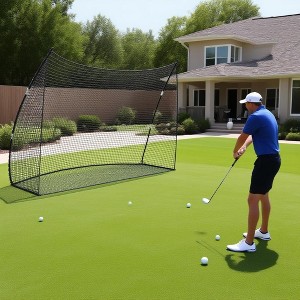
Outdoor nets face wind, rain, and sun. Look for UV-resistant material and sturdy ground anchors. Always check for obstacles or breakable items behind or beside the net. One tip: place the net with plenty of open space behind it, so even if a ball escapes, it won’t hit anything valuable.

Common Problems And How To Avoid Them
1. Ball Bouncing Back
If the net is too tight or stretched, balls can bounce back at dangerous speeds. The best nets are designed to “give” a little, absorbing energy rather than reflecting it. If bounce-back is an issue, loosen the net or add a back panel.
2. Net Tearing Or Wearing Out
Even strong nets eventually wear down, especially where most shots land. Rotate your net or move the target around to spread the impact. Inspect the net regularly—small tears can quickly become big holes.
3. Missed Shots
Beginner golfers sometimes hit the frame or miss the net entirely. Use a net wider than your typical shot spread, and start with shorter clubs while you build accuracy.
4. Using The Wrong Balls
Some people use foam or plastic balls for safety, but these don’t feel or fly like real golf balls. If you want real practice, make sure your net is rated for real balls and check your local area for any rules or noise concerns.
Key Features To Look For
When shopping for a golf practice net, consider these features to ensure it can handle real golf balls:
- Material strength: Look for heavy-duty nylon, polyester, or proprietary blends.
- Double or triple layers: Extra sheets add durability and safety.
- Large strike area: Gives more margin for error.
- Stable frame: Steel or reinforced fiberglass is best.
- Easy setup: Pop-up or quick-assembly models save time.
- Portability: If you plan to move your net, check the weight and carrying bag.
- Weather resistance: For outdoor use, UV and water protection are essential.
Not all expensive nets are better. Read user reviews, and look for independent tests with real golf balls.
Safety Tips For Using Golf Practice Nets
- Always inspect your net before each session for damage or wear.
- Place the net away from windows, cars, or breakable objects—even the best nets can fail.
- Stand at a safe distance; never hit full shots if you feel too close to the net.
- Use proper mats to protect your floor or lawn.
- If children or pets are nearby, make sure they stay clear while you practice.
Cost Vs. Performance: Is It Worth Buying A Premium Net?
A common question is whether a higher-priced net is really necessary. The answer depends on how often and how hard you plan to practice. Budget nets can work for chipping or pitching, but for repeated full swings with real balls, a premium net is usually safer and longer-lasting.
Here’s a quick look at cost versus performance:
| Price Range | Material Quality | Suitable for Real Balls? | Expected Lifespan |
|---|---|---|---|
| Under $100 | Light mesh | Usually no | 6 months – 1 year |
| $100–$200 | Mid-range nylon/polyester | Sometimes | 1–2 years |
| $200 and up | Heavy-duty, multi-layer | Yes | 2–5 years |
For frequent practice, the extra investment in a quality net can actually save money by avoiding replacements and repairs.
Two Insights Most Beginners Miss
- Net placement matters almost as much as quality. Even the toughest net can fail if placed too close to a wall or window. Always allow for some “give” and extra space behind the net.
- Not all “real ball” ratings are equal. Some brands use the term loosely. Look for independent reviews or videos that show the net in use with drivers, not just wedges.
The Bottom Line
Yes, golf practice nets can stop real golf balls—but only if you choose the right net, set it up properly, and use it with care. Always check for strong materials, reinforced strike zones, and a stable frame. Pay attention to wear and tear, and don’t be tempted by cheap nets that are only safe for lightweight balls. With the right net, you can safely practice your swing at home, saving time and money while building your skills.
To see more about golf practice nets and their safety ratings, you can visit this Wikipedia guide on golf training aids.

Frequently Asked Questions
Can I Use A Golf Practice Net Indoors With Real Golf Balls?
Yes, but you must choose a net rated for real balls, set it up with space behind it, and make sure no breakable objects are nearby. Adding a curtain or extra mat behind the net can add safety.
How Long Does A Good Golf Practice Net Last?
A high-quality net should last 2–5 years with regular use, but this depends on how often you practice, the clubs you use, and whether you leave the net outdoors. Inspect regularly for wear.
Are All Practice Nets Safe For Driver Shots?
No. Many nets are only safe for chipping or pitching. Always check the manufacturer’s rating. For full driver shots, use a net specifically designed and tested for high-speed impacts.
What Size Golf Practice Net Should I Buy?
A net at least 7 feet wide and 7 feet high is good for most home golfers. Larger nets give more margin for error, especially for beginners.
Can I Repair A Torn Golf Practice Net?
Small tears can be fixed with heavy-duty thread or repair kits, but large holes or worn-out strike zones usually mean it’s time for a new net. Regular inspection helps catch problems early.


